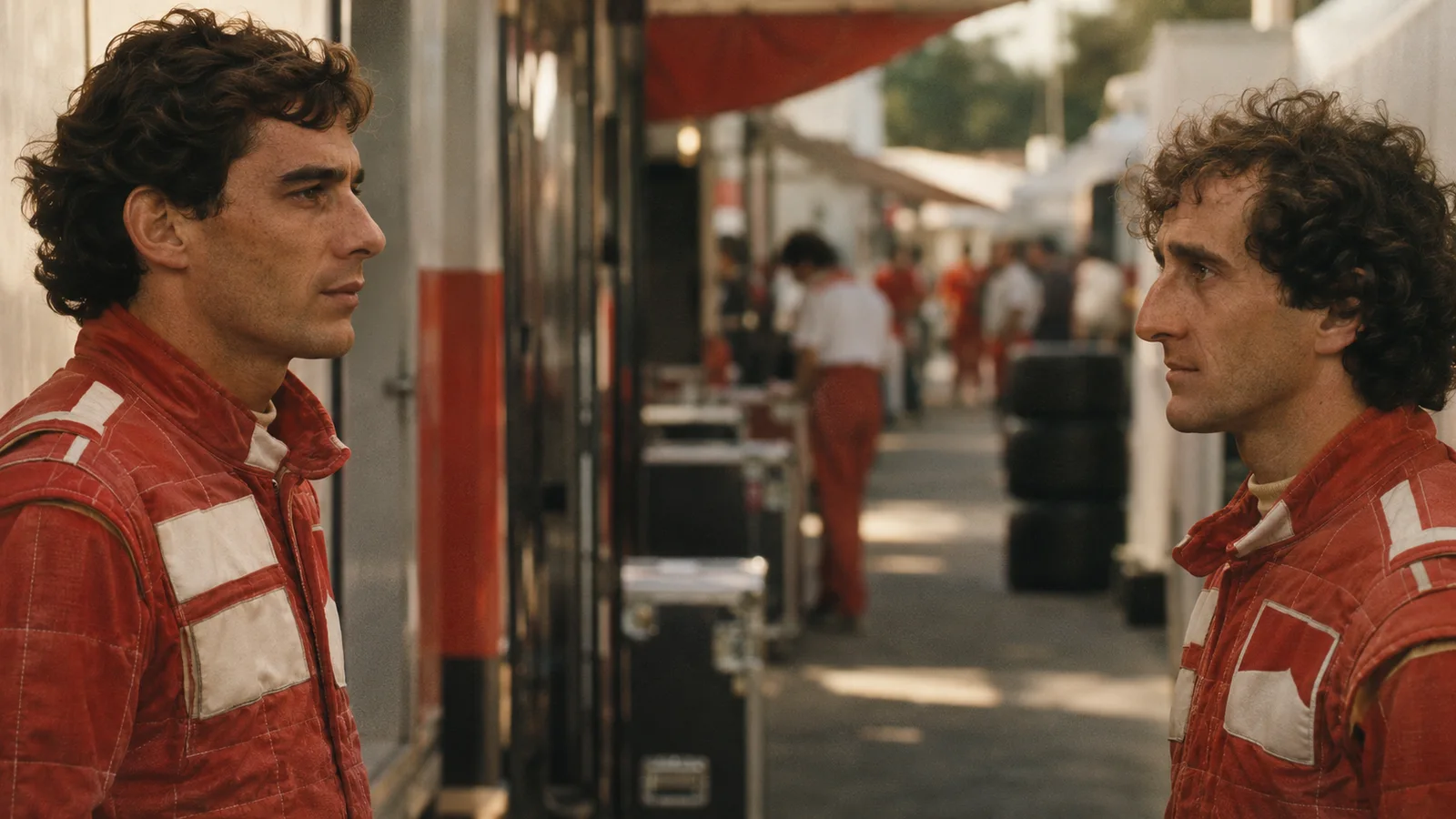
They were not opposites placed on a stage to make one man look heroic. Prost and Senna were two exceptional competitors, each with a claim on the same team, the same machinery and the same championship.
In this story 7 sections ↓
Begin on Prost’s side of the garage
When Senna arrived at McLaren, Prost had already won two world championships and helped establish the team’s success. He was not a cautious obstacle waiting for a more interesting driver to appear. He brought speed, technical judgement and a history of working with the organisation that Senna was joining.
In his own later interviews, Prost said he had supported recruiting the younger Brazilian. He saw Senna as the future of the team. That matters because it interrupts the idea that hostility was inevitable from the beginning. The partnership began as a sporting decision that could make McLaren stronger, made by people who had not yet experienced what competing inside that advantage would do to them.
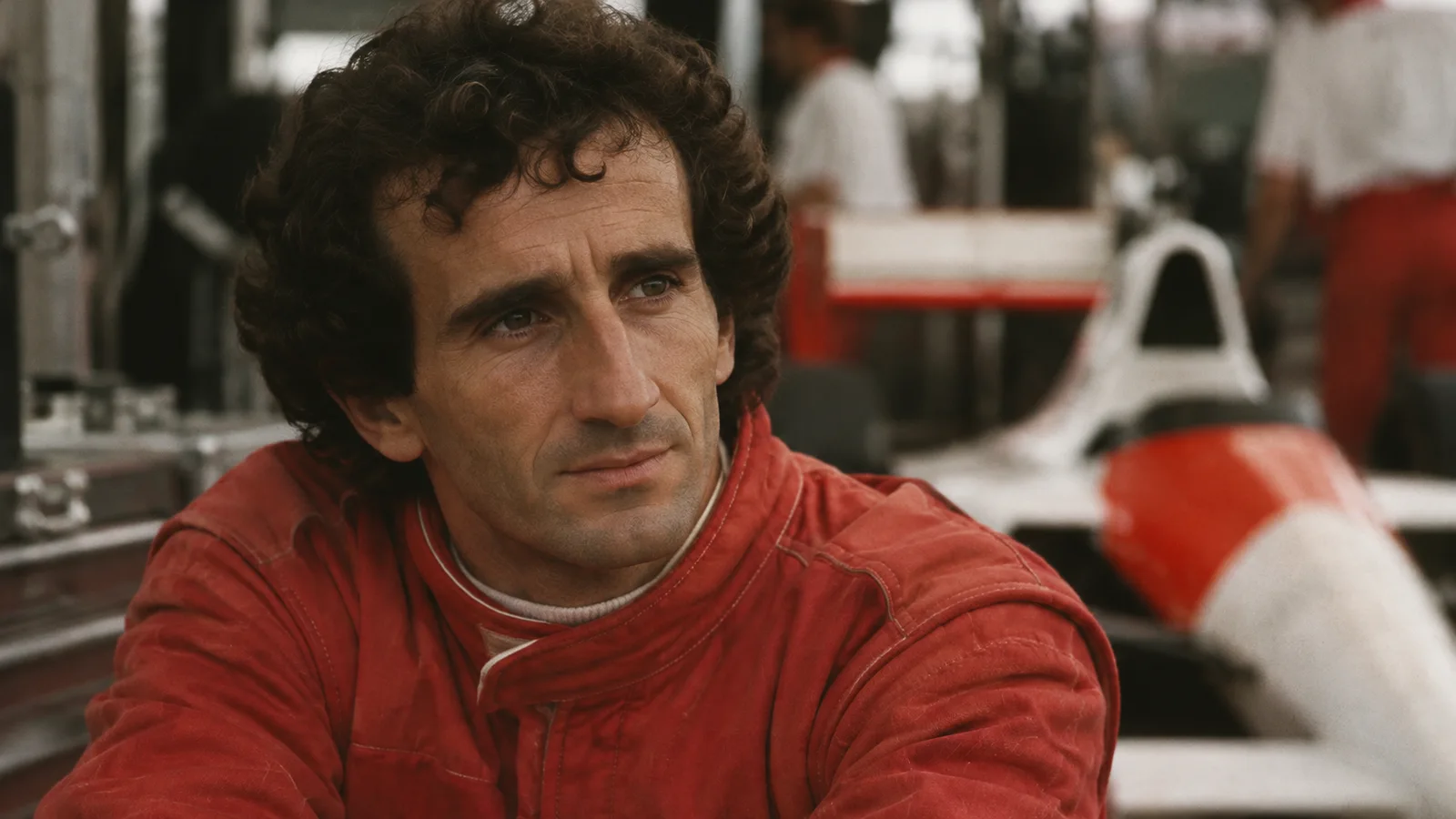
An imagined portrait of Alain Prost. Not a documented sitting, reaction or judgement of his character.
Equality is also a matter of trust
Dennis promised fair treatment. But two drivers can be given comparable equipment and still worry about whose comments carry more weight, who has a closer relationship with the engine partner, or whether a decision reflects a preference. The manager’s task was therefore larger than allocating hardware.
Dennis remembered the rival confidences and the ways both men worked through Honda and the press. Prost’s accounts place more emphasis on his sense of belonging to the team and how that changed. These perspectives do not need to be forced into one definitive explanation. They show how a technically dominant partnership could become emotionally and politically unstable.
A championship is made by its rules
Senna won eight races to Prost’s seven in 1988. The championship counted the best eleven results for each driver, and Senna won under that system. Prost’s greater points total before dropped scores is an important piece of context, not an alternative official championship.
The distinction also shows why one simple description of their styles is inadequate. A driver must perform within the rules actually in force, while fans and historians can still ask what different measures reveal. Wins, consistency, qualifying and reliability illuminate different parts of a season. None is a complete substitute for the others.
Suzuka, 1989: contact and a judgement
At the chicane, Senna tried to pass. Prost turned for the corner and the cars became interlocked. Prost abandoned his McLaren. Senna continued after assistance, returned through the escape road, replaced his front wing and recovered the lead from Alessandro Nannini. Crossing the line first did not settle the result.
The disqualification concerned his return to the circuit, rather than being a simple penalty for the collision itself. McLaren challenged the decision, and the championship went to Prost. Responsibility for the contact remains disputed. The official classification and the competing interpretations need to remain distinct, especially when retelling the event from the perspective of one of its participants.
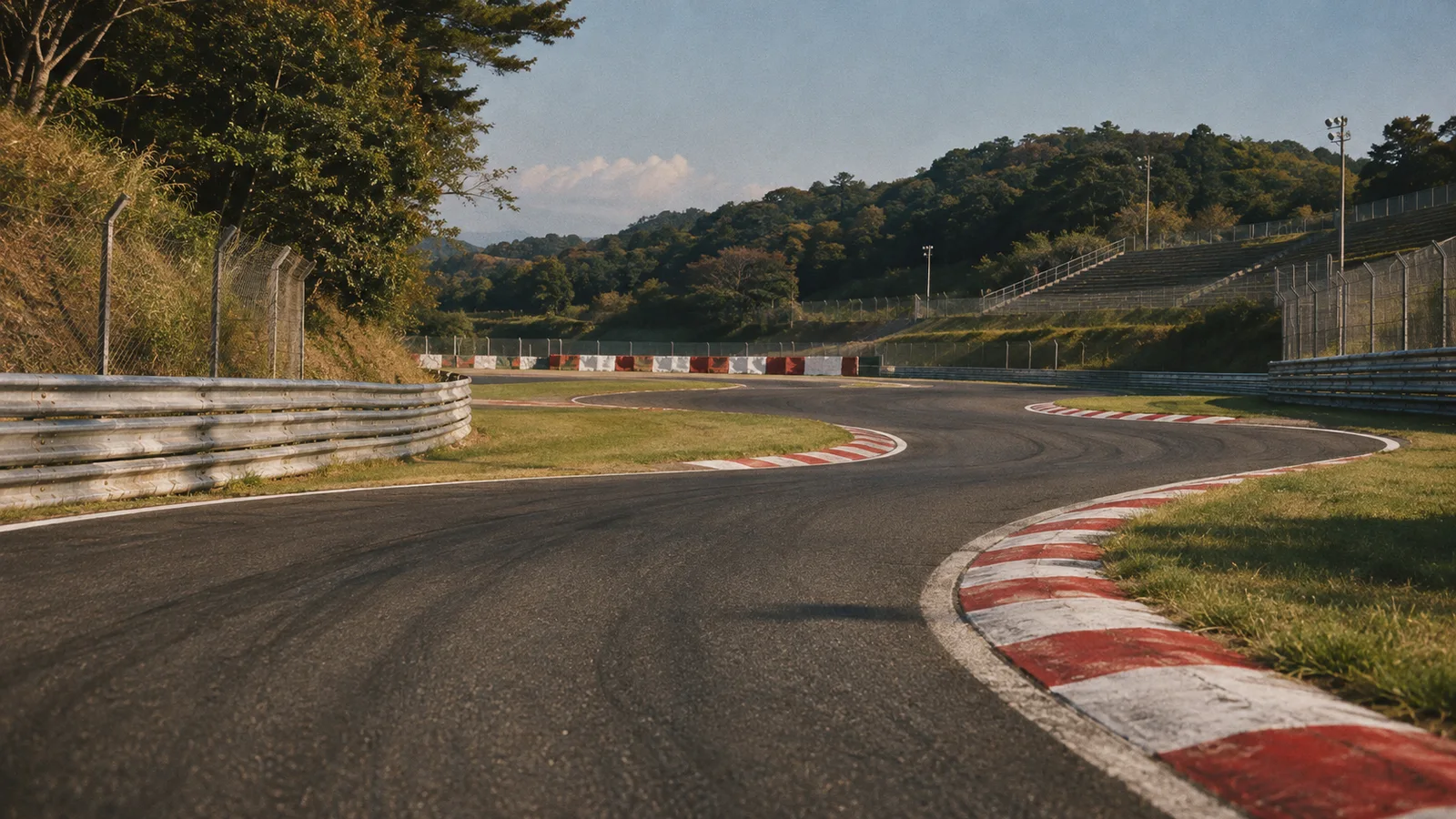
An interpretive circuit setting, not a scale diagram or evidence about either driver’s intent.
Suzuka, 1990: the decision that endangered both
Prost was now driving for Ferrari. Senna’s anger about starting pole on the dirtier side of the grid preceded the first-corner collision that removed both cars and secured his second championship. In 1991 he acknowledged the deliberate nature of the action.
Prost later explained how deeply he objected not only to the incident but also to the support he believed it received from others. That is his perspective, and it is essential to the account. To the person whose car had been struck, the event was not simply a satisfying reversal of 1989. It involved danger imposed on him, with a championship result attached.
A rival is not a different species
The contrast between instinctive Senna and calculating Prost is memorable because it is easy to repeat. It becomes less useful when it suggests that Senna did not calculate or Prost did not possess exceptional feel and speed. Both had to understand machinery, manage risk and turn ability into results.
What differed included temperament, circumstances, ambitions within the team and the meaning each gave to the other’s actions. Simplifying those differences into a moral identity can make every later fact look like confirmation. Their rivalry is more revealing when each driver is allowed the full range of a competitive human being.
After there was no longer a championship to share
Prost retired after the 1993 season. Senna won their final Grand Prix together in Adelaide, and the public podium encounter suggested a thaw. More significant were the later conversations Prost described: calls in which they could talk without immediately returning to the same competitive problem.
He was careful in 2018 about exactly what label to give that relationship. We do not need to turn it into a perfect friendship to recognise a change. The removal of the direct contest made another kind of contact possible. A rivalry that had looked total could be seen, finally, as one part of two lives rather than the entirety of either.
THE RECORD BEHIND THE STORY
Sources & perspective
References are connected to the passages above. Recollections retain the perspective of their speakers; technical explanations and editorial interpretation do not imply access to private thoughts. All scene imagery is AI-generated.
01 · Formula 1 · March 2023Alain Prost: Beyond the Grid interview transcript ↗Prost’s own account of his place in McLaren, Senna’s recruitment and his 1993 championship.02 · Beyond the Grid · Formula 1 · 26 September 2018Prost on his career and his relationship with Senna ↗Prost describes supporting Senna’s arrival and their conversations after his retirement. An attributed perspective.03 · Formula 1 · April 2014Ron Dennis on Senna: the early years ↗Dennis’s account of recruitment, politics, equality and managing the 1989 team conflict.04 · McLaren · heritageAyrton Senna ↗Six McLaren seasons, championships and the Ford-powered MP4/8.05 · McLaren · team archiveTen defining Senna moments at McLaren ↗Suzuka 1988, championship moments and the distinction between a race win and an official classification.06 · Formula 1 · 22 October 2019Prost vs Senna: Suzuka ’89 ↗Collision, rejoining the circuit, disqualification and the title decision.07 · David Tremayne · Formula 1 · April 2024Why Suzuka is so special: a reporter remembers ↗Eyewitness recollections of Senna’s response to the 1990 collision and his subsequent 1991 admission.08 · Alain Prost interviewed by Motor Sport · October 1998Ayrton Senna by Alain Prost ↗Prost’s own account of danger, rivalry and their later conversations; presented as his perspective.09 · Formula 1 · official results1993 Australian Grand Prix: race result ↗7 November 1993: Senna, Prost and Hill on the podium.Full bibliography & image disclosure ↗