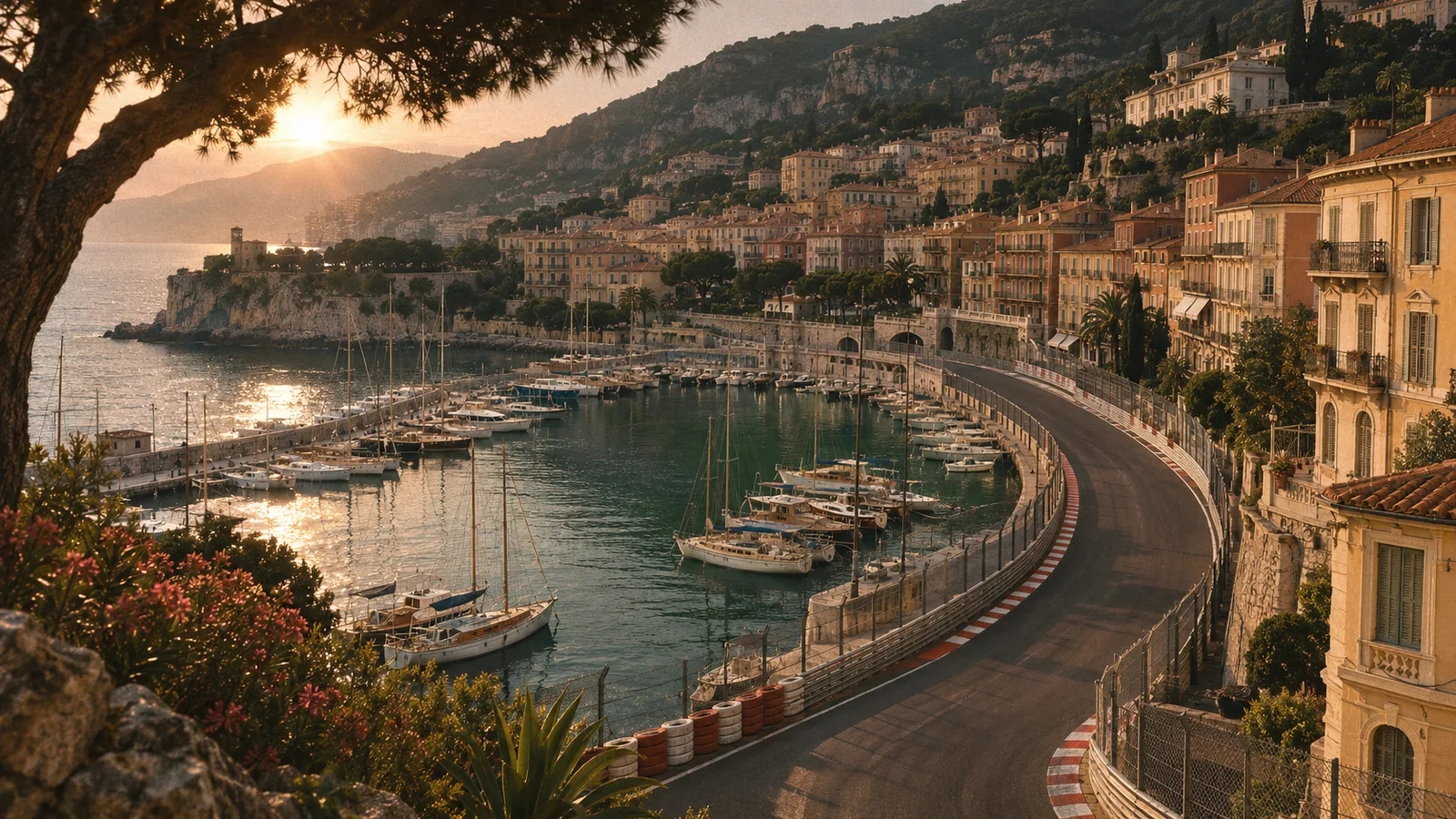
At Monaco in 1988, the same weekend gave Senna a measure of extraordinary speed and a lesson no stopwatch could protect him from. Saturday and Sunday belong together.
In this story 6 sections ↓
The city leaves little room
Monaco’s circuit passes between barriers and buildings, compressing the choices that a wider track can leave open. A slightly misplaced car may have no forgiving surface beside it. Speed here is not simply a product of accelerating hard. It depends on knowing where the car must be before the next piece of road arrives.
Senna had already won in Monaco with Lotus in 1987. In 1988 he returned in the MP4/4, with Prost in the other McLaren. The team’s advantage over much of the field made the internal comparison unusually exposed. One driver could be quick enough to beat the opposition and still find his teammate working at a different level.
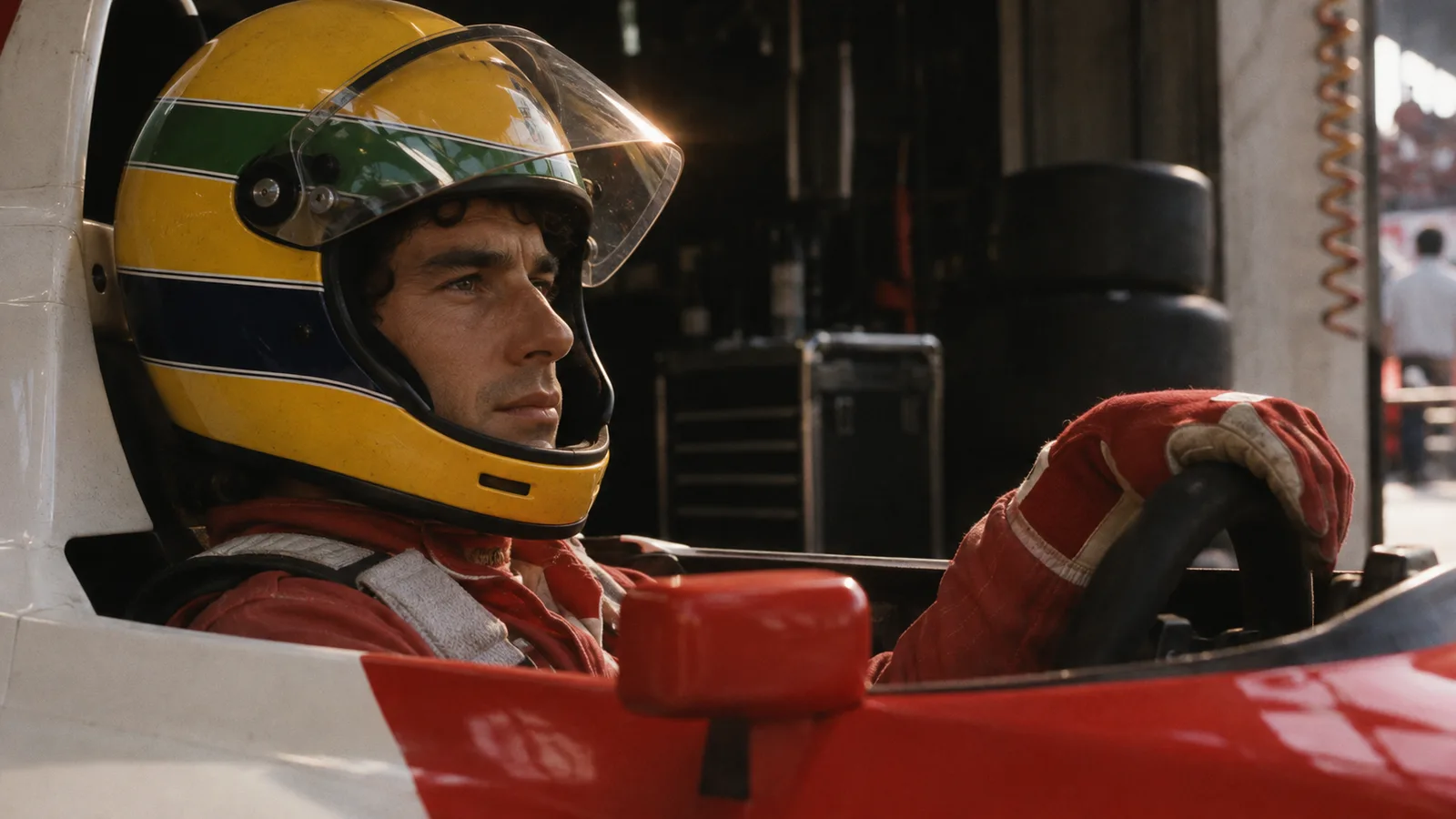
An imagined 1988 preparation scene, not a photograph of the famous lap or access to Senna’s private thoughts.
The difference on the timing sheet
The final qualifying times were 1:23.998 for Senna and 1:25.425 for Prost: 1.427 seconds between the two. Those figures are worth keeping separate from every later description. They establish a remarkable gap to a proven world champion using comparable equipment.
Comparable is not identical in every operational detail. Setup, track position and the quality of each driver’s completed laps still matter. The result does not settle every possible question about their relative abilities. It does show that, on this particular qualifying weekend, Senna extracted a performance that Prost’s final time did not approach.
The experience, in his own account
In a recorded interview at Silverstone in June 1990, Senna described going progressively quicker until the circuit seemed to narrow into a tunnel. He spoke of the driving as extending beyond his normal conscious understanding, and of slowing when he recognised how vulnerable he had become.
That account helps us understand how he chose to explain the lap. It is not access to an otherwise unrecorded inner monologue, and it is not a replacement for the timing evidence. The two kinds of record sit beside each other: a measured performance, and the driver’s later attempt to describe what producing it felt like.
Sunday reaches Portier
Senna led the race comfortably. Then, at Portier, he clipped the barrier and the McLaren was out. The physical difference between completing the corner and losing the race was small; the consequence was complete. Prost inherited the victory.
McLaren’s account, including Ron Dennis’s recollection, describes the intensity of Senna’s anger with himself afterwards. It is a revealing reversal of the public picture from qualifying. The same determination that had made another improvement irresistible could not recover a car from the barrier. The afternoon required finishing, not proving once more that the greatest speed was available.
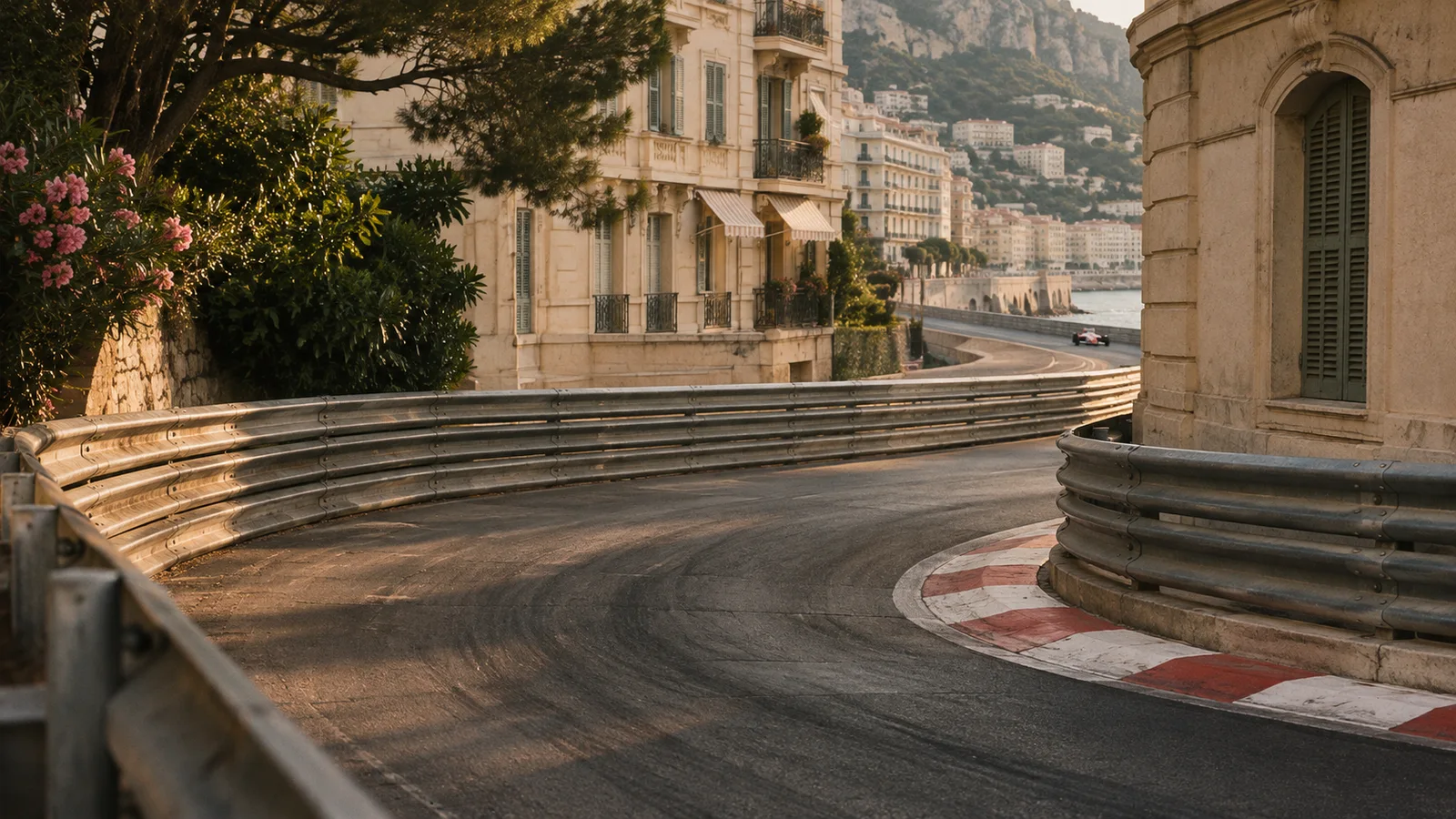
An interpretive view of the corner. No impact is reconstructed; barriers and buildings are approximate.
Why a qualifying lap cannot win a race
Qualifying isolates a particular demand: complete the fastest lap you can. A Grand Prix adds a different set of obligations. The car must survive, tyres and fuel must remain sufficient, traffic must be judged, and concentration must continue even when the immediate contest looks settled.
The lesson is not that a driver should stop pushing whenever he leads. Too little commitment can create its own errors. It is that performance has several forms, and the right one changes with the task. Monaco made Senna’s highest single-lap ability visible while refusing to let that ability stand in for every other skill a Sunday required.
A loss inside a longer relationship
He returned to win Monaco in each of the next five seasons. Together with the Lotus victory, those wins made six. The 1988 mistake became part of that record rather than its final definition. It remained a reminder that familiarity with a circuit does not remove its ability to punish a small error.
The weekend endures because it resists a single uncomplicated meaning. It was one of the most startling displays of speed in the era, and it ended with another driver winning. Following Senna through it means allowing the exhilaration and the failure to remain in the same frame.
THE RECORD BEHIND THE STORY
Sources & perspective
References are connected to the passages above. Recollections retain the perspective of their speakers; technical explanations and editorial interpretation do not imply access to private thoughts. All scene imagery is AI-generated.
01 · McLaren · team archiveSenna’s moments of Monaco magic ↗His six Monaco wins and the loss in 1988. A former employer’s perspective.02 · Honda · machine archiveMcLaren MP4/4 ↗Purpose-built 1988 chassis, Honda engine and fuel restrictions. Technical context from the engine partner.03 · Formula 1 · official results1988 Monaco Grand Prix — qualifying ↗Senna 1:23.998; Prost 1:25.425. The difference is calculated from these times.04 · McLaren · Legendary LapsSensational Senna in Monaco ↗Includes Senna’s account recorded at Silverstone on 27 June 1990 and Dennis’s recollection of the aftermath.05 · Formula 1 · 2 May 2014Vital statistics: Ayrton Senna ↗Historical totals. Any all-time rankings in this 2014 article are dated and are not repeated as current rankings.Full bibliography & image disclosure ↗